
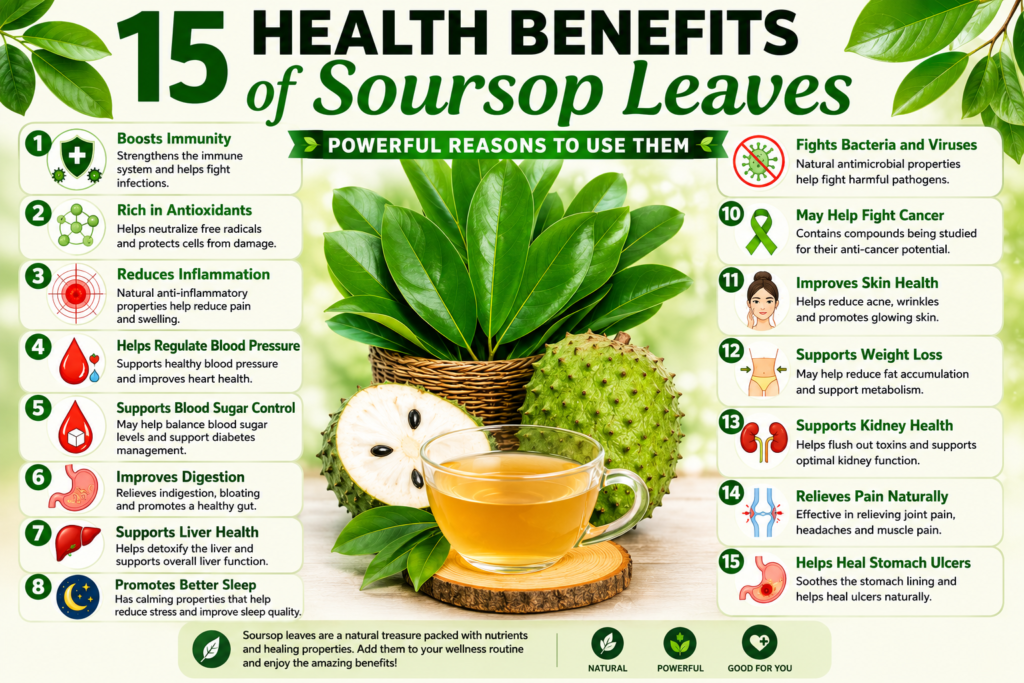
15 Health Benefits of Soursop Leaves
The Best 15 Health Benefits of Soursop Leaves: There’s a tree that grows quietly in tropical backyards across the Caribbean, Latin America, West Africa, and Southeast Asia. Its fruit is spiky and green, oddly large, and so sweet inside that people call it one of nature’s most underrated desserts. But here’s the thing — it’s not the fruit getting all the attention from researchers and traditional healers. It’s the leaves.
Soursop leaves — the flat, glossy, deep-green leaves of the Annona muricata tree — have been used for centuries in folk medicine across the globe. Grandmothers in Jamaica brew them into tea for sleep. Herbalists in Nigeria use them for fever. In Brazil, they’re part of remedies passed down through generations for calming the stomach and easing pain.
Modern science is now catching up, and what researchers are finding is genuinely interesting. Soursop leaves are packed with bioactive compounds — including acetogenins, flavonoids, alkaloids, and antioxidants — that appear to have measurable effects on the human body. This article walks you through 15 of the most well-documented and widely discussed 15 Health Benefits of Soursop Leaves, explains what the research says, covers how soursop leaf tea is made, and is honest about the side effects and limitations you should know.
Let’s get into it.
What Are Soursop Leaves, Exactly?
Before we dive into the benefits, it’s worth knowing a little about what you’re dealing with. The soursop tree (Annona muricata) belongs to the Annonaceae family. It’s an evergreen tree that thrives in warm, humid climates and is widely cultivated across tropical regions of the world.
The leaves are dark green, shiny, and oblong — they smell faintly aromatic when crushed. Traditionally, they’ve been used in teas, poultices, and topical preparations. Today you can find them sold as dried leaf tea bags, capsule supplements, and even tinctures in 15 Health Benefits of Soursop Leaves food stores and online.
What makes the leaves medicinally interesting is their chemical profile. According to research published in journals including the Journal of Ethnopharmacology, soursop leaves contain:
- Annonaceous acetogenins — unique compounds with potential anti-tumor properties
- Flavonoids and antioxidants — which help fight oxidative stress
- Alkaloids — with sedative and anti-inflammatory effects
- Tannins and saponins — known for antibacterial and digestive support
- Vitamins and minerals — including vitamin C, B vitamins, calcium, and iron
With that foundation in place, let’s look at what these compounds actually do.
Powerful Antioxidant Protection
One of the most consistent findings in soursop leaf research is their high antioxidant activity. Antioxidants are substances that neutralize free radicals — unstable molecules that damage your cells and contribute to aging, inflammation, and chronic diseases like heart disease and cancer.
A study published in the Asian Pacific Journal of Tropical Biomedicine found that soursop leaf extracts showed significant antioxidant activity in laboratory settings, with the flavonoids and phenolic compounds in the leaves being the primary contributors.
This antioxidant capacity is the foundation for many of the other benefits on this list — it’s why the leaves seem to have such a wide range of potential effects on the body.
Anti-Inflammatory Effects
Chronic inflammation sits at the root of dozens of serious 15 Health Benefits of Soursop Leaves conditions — from arthritis to heart disease to depression. Soursop leaves contain several compounds that appear to dial down inflammatory processes in the body.
Research has found that alkaloids and flavonoids in soursop leaves inhibit certain inflammatory pathways, particularly by reducing the production of pro-inflammatory cytokines. A 2014 study in the International Journal of Molecular Sciences highlighted the anti-inflammatory potential of Annona muricata leaf extracts, noting their ability to suppress inflammation in animal models.
For people dealing with joint pain, muscle soreness, or inflammatory conditions, soursop leaf tea is often used as a complementary approach — though it should never replace prescribed medication without speaking to a doctor first.
Potential Anti-Cancer Properties
This is the benefit that gets the most attention — and also deserves the most careful handling. Let’s be straightforward: soursop leaves are not a proven cancer treatment, and anyone telling you otherwise is misleading you. However, the preliminary research is genuinely worth understanding.
Soursop leaves are rich in compounds called annonaceous acetogenins, which are unique to the Annonaceae plant family. Laboratory and animal studies have shown these compounds can selectively target and inhibit the growth of certain cancer cell lines — including breast, colon, prostate, and lung cancer cells — while leaving healthy cells relatively unaffected.
A frequently cited review in the Journal of Medicinal Chemistry described how acetogenins work by disrupting the energy production of cancer cells, essentially cutting off their fuel supply.
The critical caveat: almost all of this research has been done in vitro (in test tubes) or in animal models. Human clinical trials are very limited. The National Cancer Institute has noted interest in acetogenins but has not endorsed soursop as a cancer treatment. Until large-scale human trials exist, soursop leaves should be seen as a complement to conventional care — not a replacement for it.
Antimicrobial and Antibacterial Action
Soursop leaves have a long history of use in treating infections, and the research offers some support for this traditional use. Studies have found that soursop leaf extracts show activity against a range of bacteria and fungi, including Staphylococcus aureus, E. coli, and Candida albicans.
A study published in the African Journal of Pharmacy and Pharmacology demonstrated that soursop leaf extracts had significant inhibitory effects on several strains of bacteria commonly associated with foodborne illness and skin infections.
This may explain why traditional healers have long used soursop leaf preparations for wound cleaning, skin infections, and even stomach upsets caused by bacterial sources.
Blood Sugar Regulation
Managing blood sugar is a priority for the hundreds of millions of people worldwide living with diabetes or prediabetes. Several studies suggest soursop leaf extracts may have a role in supporting better blood sugar control.
Animal studies have found that soursop leaf extract can reduce fasting blood glucose levels and may improve insulin sensitivity. The mechanism appears to involve the inhibition of certain enzymes responsible for breaking down carbohydrates in the digestive tract, similar to how some diabetes medications work.
Research in the African Journal of Traditional, Complementary and Alternative Medicines showed that diabetic rats treated with soursop leaf extract had significantly lower blood glucose levels compared to controls. Human research is still limited, but the early findings are encouraging.
Important: If you have diabetes and take medication, never add soursop leaf tea without consulting your doctor, as it may compound blood sugar lowering effects.
Supports Healthy Blood Pressure
Hypertension is one of the biggest contributors to heart disease and stroke globally. Soursop leaves contain potassium and certain compounds that may help relax blood vessel walls and support healthy circulation.
Traditional Caribbean and African medicine has used soursop leaf tea as a remedy for high blood pressure for decades. Some small-scale studies have supported this use, finding that certain alkaloids in the leaves may act as natural vasodilators — substances that help widen blood vessels and ease the pressure within them.
The World Health Organization recognizes traditional plant medicines as an important part of primary healthcare in many parts of the world, while also emphasizing the need for rigorous clinical validation. Soursop leaf research in this area is still evolving.
Promotes Better Sleep
If you’ve ever struggled to sleep, you know how much it affects everything else — your mood, your focus, your immune system, your relationships. Soursop leaf tea is widely used across West Africa and the Caribbean as a natural sleep aid, and there’s some science behind why it might help.
The alkaloids in soursop leaves — particularly those with sedative properties — are thought to interact with serotonin receptors in the brain, promoting relaxation and reducing the time it takes to fall asleep. Some traditional preparations involve combining the leaves with other calming herbs for an even stronger effect.
A cup of soursop leaf tea an hour before bed is a common recommendation in many traditional medicine systems. It won’t knock you out like a sleeping pill, but many people report feeling more relaxed and sleeping more deeply after regular use.
Digestive Health and Stomach Relief
Soursop leaves have been used for generations to settle upset stomachs, ease digestive discomfort, and address issues like constipation and diarrhea. The tannins and saponins in the leaves appear to have a soothing and regulating effect on the digestive tract.
The antimicrobial properties discussed earlier are also relevant here — if stomach discomfort is caused by bacterial overgrowth (which is common), soursop leaves may help address the root cause.
Additionally, the leaves have traditionally been used to treat intestinal parasites in tropical communities where access to pharmaceutical dewormers is limited. Research published in the Journal of Parasitology Research supports some antiparasitic activity in soursop extracts, though more human research is needed.
Liver Protection
Your liver works hard every day — filtering toxins, producing bile, metabolizing everything you eat and drink. Supporting liver health is one of the lesser-known potential benefits of soursop leaves.
Animal studies have found that soursop leaf extract can protect liver cells from damage caused by toxins and oxidative stress. The antioxidant compounds in the leaves appear to reduce markers of liver damage in these models, and some researchers have proposed soursop leaf extract as a candidate for further study in hepatoprotective (liver-protecting) treatments.
This is an area where human research is particularly thin, so the results should be viewed as preliminary — but promising.
Pain Relief and Analgesic Properties
Soursop leaves have a traditional reputation for relieving pain — from headaches and back pain to joint aches and menstrual cramps. Some of the compounds in the leaves, particularly the alkaloids, are believed to interact with pain pathways in the central nervous system.
A study conducted in Nigeria found that soursop leaf extract produced significant pain-relief effects in animal models, comparable in some measures to non-steroidal anti-inflammatory drugs (NSAIDs) at certain doses. The anti-inflammatory mechanisms described earlier also contribute to the analgesic effect.
People dealing with chronic pain conditions sometimes incorporate soursop leaf tea as a complementary approach alongside prescribed treatments. Again — always let your healthcare provider know what herbal supplements or teas you’re using, especially if you take other medications.
Immune System Support
A well-functioning immune system is your body’s first defense against illness. Soursop leaves contribute to immune health through multiple pathways: their antioxidant content reduces oxidative stress on immune cells, their antimicrobial compounds help reduce the body’s overall infectious load, and their vitamin C content directly supports immune function.
Vitamin C is one of the best-documented immune-supporting nutrients available, and while soursop leaves contain it in modest amounts, regular consumption as part of a varied diet contributes to your overall intake. The National Institutes of Health highlights vitamin C’s role in stimulating the production and function of white blood cells — the frontline soldiers of your immune system.
Stress and Anxiety Relief
Alongside the sleep benefits, soursop leaves are traditionally used to ease stress, anxiety, and nervous tension. This isn’t just placebo — the sedative alkaloids in the leaves have genuine calming effects that research has begun to document.
In several animal studies, soursop leaf extracts reduced anxiety-related behaviors and lowered stress markers. The mechanism appears to involve interaction with GABA receptors in the brain — the same receptors targeted by some prescription anti-anxiety medications, though at a far gentler level.
Many people find that a warm cup of soursop leaf tea in the evening helps them decompress after a stressful day — and given the science, that experience makes sense.
Skin Health Benefits
The antioxidant, anti-inflammatory, and antimicrobial properties of soursop leaves make them potentially valuable for skin health as well. Topical applications of soursop leaf preparations have been used traditionally to address skin conditions including eczema, rashes, insect bites, and acne.
The compounds in the leaves may help reduce the bacterial load on skin (helpful for acne), calm inflammatory responses (helpful for eczema and rashes), and protect skin cells from oxidative damage (contributing to slower visible aging).
Some commercial skincare brands have begun incorporating soursop-derived ingredients into their products, reflecting growing interest in the plant’s potential dermatological applications. Research in this area is still early but growing.
Bone and Joint Health
Soursop leaves contain minerals including calcium, phosphorus, and zinc — nutrients that are foundational to bone density and joint health. While the amounts in leaf tea aren’t dramatic, regular consumption contributes to overall mineral intake.
More significantly, the anti-inflammatory properties of the leaves may offer direct relief to people dealing with inflammatory joint conditions like arthritis. By reducing the systemic inflammation that drives joint pain and deterioration, soursop leaf preparations may help people move more comfortably.
The Arthritis Foundation highlights the importance of anti-inflammatory dietary choices in managing arthritis symptoms — and soursop leaf tea fits naturally into that kind of approach.
Weight Management Support
While soursop leaves aren’t a weight loss miracle (nothing is), they may offer modest support for people working toward a healthier weight. Here’s how:
- The blood sugar regulation benefits help reduce energy crashes and sugar cravings that lead to overeating
- The digestive support properties help the gut process food more efficiently
- Some preliminary research suggests soursop leaf compounds may influence fat metabolism, though this is very early-stage
- Replacing high-calorie beverages with soursop leaf tea is itself a helpful dietary shift
Soursop leaf tea is calorie-free, hydrating, and genuinely pleasant to drink. As part of a balanced diet and active lifestyle, it’s a sensible addition for anyone watching their weight.
How to Make Soursop Leaf Tea
Making soursop leaf tea is simple — whether you’re using fresh leaves from the tree or dried leaves bought from a health store or online. Here’s a straightforward method:
What You’ll Need
- 10–15 fresh soursop leaves (or 5–6 dried leaves / 1–2 teaspoons of dried leaf flakes)
- 3 cups of water
- Optional: a slice of ginger, a cinnamon stick, or a small amount of honey for taste
Method
- Rinse the leaves thoroughly under cold water
- Bring the water to a boil in a small saucepan
- Add the leaves (and ginger/cinnamon if using)
- Reduce to a simmer and let it steep for 15–20 minutes
- Remove from heat and allow to cool slightly
- Strain into a cup and drink while warm
You can drink 1–2 cups per day. Avoid drinking more than this, particularly if you’re pregnant, breastfeeding, or taking prescription medications.
Dried soursop leaves are widely available from reputable herbal suppliers and most health food stores. If you can’t find them locally, they’re easy to order online — just make sure to buy from a supplier that provides clear sourcing information.
Soursop Leaves Benefits for Women
Several of the benefits above have particular relevance for women:
- Menstrual pain relief: The analgesic and anti-inflammatory properties make soursop leaf tea a popular natural remedy for period cramps
- Hormonal balance support: Some traditional uses involve soursop leaves for hormone-related mood changes, though clinical research here is limited
- Breast cancer research: Much of the acetogenin research has focused on breast cancer cell lines, making this a particularly relevant area — while also being one where more human research is urgently needed
- Skin and hair health: Women dealing with skin inflammation or hair-related issues sometimes use soursop leaf preparations topically
- Bone density: Post-menopausal bone loss is a major concern for women, and soursop’s mineral content and anti-inflammatory properties offer modest complementary support
Note: Pregnant women should avoid soursop leaves. Some research suggests the compounds may stimulate uterine contractions. Always consult a healthcare provider before use during pregnancy or breastfeeding.
Soursop Leaves Benefits for Men
Men also have specific reasons to take an interest in soursop leaves:
- Prostate health: Laboratory studies have shown soursop acetogenins may inhibit prostate cancer cell growth — one of the most common cancers in men globally
- Blood pressure management: Cardiovascular disease disproportionately affects men at younger ages, and soursop’s potential blood pressure support is particularly relevant
- Pain and inflammation: Men dealing with sports injuries, joint pain, or muscle soreness may find soursop leaf tea a gentle, natural complement to recovery
- Stress management: Men often experience stress differently and may be less likely to seek conventional mental health support — the calming properties of soursop leaf tea offer an accessible entry point
- Metabolic health: The blood sugar and weight management benefits are relevant to the metabolic syndrome concerns that are highly prevalent in adult men
Side Effects and Important Cautions
Soursop leaves are generally considered safe when consumed in moderation as a tea. However, there are real side effects and contraindications you should be aware of:
Potential Side Effects
- Neurotoxicity risk with excessive use: The acetogenins in soursop leaves have been linked to a form of atypical Parkinsonism when consumed in very large quantities over long periods. This is primarily associated with extremely high consumption (such as from very strong traditional preparations consumed daily for years) — not from occasional tea drinking. Still, moderation matters.
- Low blood pressure: If you already have low blood pressure or take blood pressure medication, soursop leaves may lower it further
- Blood sugar interactions: Diabetics on medication should consult a doctor before use
- Drug interactions: Soursop may interact with antidepressants, blood pressure drugs, and diabetes medication
- Pregnancy: As noted above, avoid during pregnancy due to potential uterine-stimulating effects
The Memorial Sloan Kettering Cancer Center maintains a detailed review of soursop (graviola) herb interactions and cautions — it’s a useful resource if you want to explore the evidence in more depth before starting use.
Frequently Asked Questions
Final Thoughts
Soursop leaves have earned their place in traditional medicine around the world — not through marketing or trends, but through centuries of practical use and, increasingly, through scientific investigation. The 15 Health Benefits of Soursop Leaves covered in this article are grounded in real research, even where that research is still developing.
Are soursop leaves a magic cure? No. Do they deserve a place in your wellness toolkit? Quite possibly — especially if you enjoy a warm cup of herbal tea, appreciate plant-based health support, and approach supplements thoughtfully rather than as replacements for medical care.
As with anything you put in your body regularly, the key is moderation, awareness of your own health context, and open communication with your healthcare provider. Start with one cup a day, see how your body responds, and let the research — old and new — guide your expectations.
Nature packed a lot into those glossy green leaves. It’s worth taking a closer look.